Technology alone does not Guarantee Better Learning
In maritime education, new technologies are often expected to improve training. It is a common believe that more digital tools, advanced simulators, and immersive systems like Virtual Reality (VR) will automatically make learning better. Yet recent reserach shows that more technology does not automatically lead to better learning or stronger transfer of training to real ship operations. What matters is how these technologies are integrated into training and assessment.
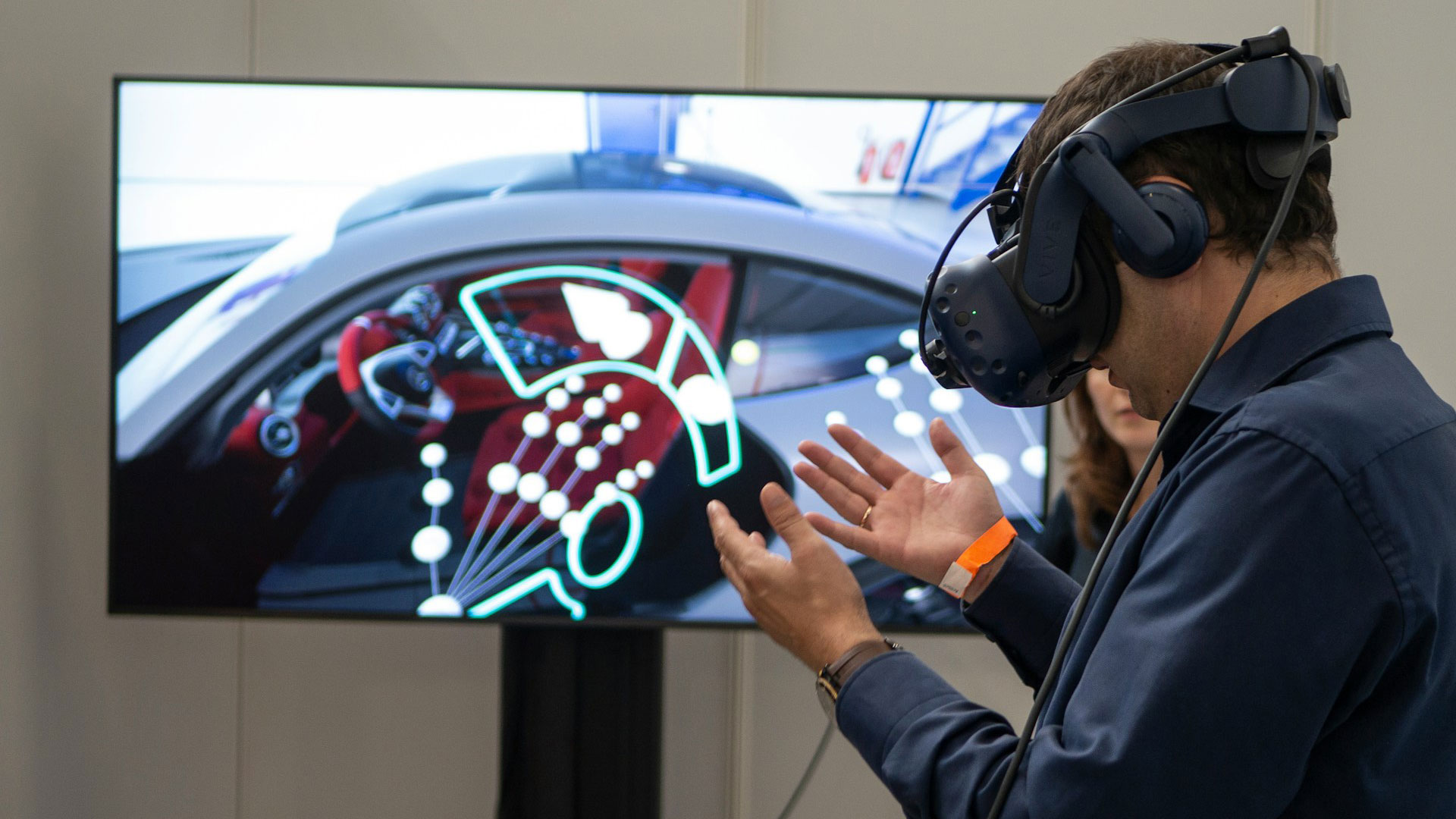
At the Centre of Excellence in Maritime Simulator Training and Assessment (COAST) this question has been explored through research on simulator training and human performance. One recent research comes from Dr. Hasan Tusher, who completed his PhD in Nautical Operations. His doctoral research examined how Virtual Reality can be used effectively in maritime simulator training and assessment (for example see Figure 1). The research, titled Virtual Reality (VR) in Maritime Simulator Training and Assessment, explored how VR technology can support maritime learning, how instructors evaluate different simulator technologies, and how students perceive VR as a training tool (Tusher et al., 2024; Tusher et al., 2023a; Tusher et al., 2023b).
The Role of VR in Maritime Education
Shipping is often described as the lifeblood of the global economy, moving goods across continents and connecting industries around the world. Behind this global system are highly trained maritime professionals responsible for the safe operation of ships in complex and often unpredictable environments.
Training these professionals is the responsibility of Maritime Education and Training (MET) institutions. Traditionally, maritime education combines classroom instruction, simulator exercises, and onboard training. However, this model is under growing pressure. Opportunities for onboard training placements are limited, while demand for qualified officers continues to rise. At the same time, ships themselves are becoming more technologically advanced. Simulator-based training has therefore become a central part of maritime education, allowing students to practice realistic operational situations in a safe environment before they encounter them at sea. Virtual Reality represents a newer generation of simulation technology that may expand these learning opportunities even further.
Key Findings of the Research
This PhD research examined VR training from several perspectives, including the technical features of VR systems, instructors’ views on different simulator technologies, and students’ perceptions of VR as a learning tool. One of the most consistent findings is that VR is particularly well suited to skill-based learning (Tusher et al., 2024; Radianti et al., 2020). In many studies, VR environments have been used to help learners develop practical abilities such as navigation tasks, operational procedures, equipment handling, and decision-making in complex situations (see Tusher thesis for further reading). Because VR places learners inside an immersive environment, it allows them to actively perform tasks rather than simply observe or read about them. These enviroments provide several features to enhance learning (for example see Figure 2). For maritime students, this means they can practice bridge operations, respond to emergency situations, and work through complex scenarios that closely resemble real challenges at sea. These simulations also help students develop important skills such as teamwork, communication, and decision-making. Within the COAST partnership, inititiaves and pilot projects have been conducted at all the institution. However, the integration of VR simulars in the curriculum have not been implemented yet.
The research also highlighted an important issue related to how performance is evaluated in simulator training. In many maritime programs, student assessment still relies largely on subjective methods such as instructor observation, self-assessment, or post-exercise questionnaires. These methods usually include self-rated scores, open-ended questions, Likert-scale surveys, and different psychological questionnaires. While these approaches remain valuable, the increasing use of digital training environments may open the door to more objective forms of performance assessment.
For example, VR systems can potentially capture detailed behavioral and performance data during training sessions. Metrics such as reaction times, decision patterns, attention levels, or even physiological indicators could provide instructors with deeper insight into how students learn and perform under pressure. Additinally, these methods include measures such as response time, physiological data (for example eye-tracking or ECG), and computer-based analysis using algorithms or artificial intelligence. Such data-driven approaches may complement traditional instructor evaluations and support more structured feedback.
The contextual suitability of VR simulators is also highlighted in research. For example, VR simulators may be preferred over full-mission simulators when remote training is considered or when personalized immersive training is focused, while full-mission simulators may be preferred for team training or in some other contexts.
VR complementing existing simulators
Another part of the research compared different types of simulators used in maritime education, including full-mission bridge simulators, desktop simulators, VR simulators, and cloud-based systems. The findings show that full-mission simulators remain the preferred training environment, largely because they closely replicate the physical layout and operational conditions of real ship bridges. However, VR simulators ranked second in preference among instructors, indicating strong interest in the technology.
Instead of replacing traditional simulators, VR will likely work alongside them, expanding training possibilities and providing more flexible learning environments. It can provide additional training environments, enable more flexible access to practice scenarios, and allow students to experience complex operational situations that may be difficult to reproduce in traditional simulators.
How students perceive VR training
The research also explored how maritime students respond to VR-based learning. Overall, students reported positive attitudes towards the technology, particularly when they felt that VR improved their learning experience, helped them understand tasks more clearly, and increased their confidence in performing operational procedures.
Interestingly, factors such as age, gender, or location did not significantly affect students’ willingness to use VR. However, the research also found that VR works best when it is part of a structured training program guided by instructors, rather than completely self-directed learning.
The Future of Maritime Training
The maritime industry is changing rapidly due to digitalization, automation, and new technologies. As a result, training methods must also evolve. Virtual Reality is unlikely to replace traditional maritime training, but it can play an important supporting role.
The most effective training environments will likely combine classroom instruction, high-fidelity simulators, VR-based learning, and real-world onboard experience. By integrating these approaches thoughtfully, maritime education can provide students with richer opportunities to develop both technical skills and operational understanding. For COAST and its partner institutions, this research represents an important step towards developing innovative, evidence-based approaches to simulator training. By integrating traditional expertise with emerging technologies like VR, maritime education can continue to prepare future seafarers for the complex challenges of the global shipping industry.
For COAST and its partner institutions, the next step is not simply increasing the use of Virtual Reality, but ensuring its effective and evidence-based integration into maritime training ecosystem. Several priority actions can support this development:
• First, partner institutions should focus on curriculum integration, where VR is systematically aligned with specific learning outcomes rather than used as an isolated tool. This includes identifying which competencies such as emergency response, situational awareness, or procedural training are best suited for VR-based learning.
• Second, there is a need to develop standardized assessment frameworks that combine traditional instructor evaluation with emerging data-driven methods. COAST partners can explore the use of VR-generated performance data (e.g., task completion time, error rates, decision patterns) to support more objective and consistent assessment practices.
• Third, instructor training and pedagogical support should be prioritized. The effectiveness of VR depends heavily on how it is used; therefore, instructors need guidance on scenario design, facilitation, and debriefing strategies to maximize learning outcomes.
• Fourth, COAST institutions can strengthen collaborative development and sharing of VR scenarios across partner organizations. A shared repository of validated training scenarios would reduce duplication of effort and promote best practices across different national and institutional contexts, including Norwegian vocational schools.
• Finally, continued research and evaluation should remain a core priority. COAST partners are well positioned to lead longitudinal studies on learning outcomes, skills transfer, and the comparative effectiveness of different simulator modalities. This will ensure that future investments in training technologies are guided by empirical evidence rather than assumptions.
References
Tusher, H. M., Nazir, S., Ghosh, S., & Rusli, R. (2023). Seeking the best practices of assessment in maritime simulator training. TransNav: International Journal on Marine Navigation and Safety of Sea Transportation.
Tusher, H. M., Mallam, S., & Nazir, S. (2024). A systematic review of virtual reality features for skill training. Technology, Knowledge and Learning.
Tusher, H. M., Munim, Z. H., & Nazir, S. (2024). An evaluation of maritime simulators from technical, instructional, and organizational perspectives: A hybrid multi-criteria decision-making approach. WMU Journal of Maritime Affairs.
Tusher, H. M. (2025). Virtual reality (VR) in maritime simulator training and assessment: Navigating the technology, practices, and user perceptions for effective integration.
Tusher, H. M., Munim, Z. H., Bhuiyan, Z., & Nazir, S. (2026). Virtual reality (VR) simulators in maritime education: Adoption factors among students in Norway and the United Kingdom. Australian Journal of Maritime & Ocean Affairs, 1–32.
Radianti, J., Majchrzak, T. A., Fromm, J., & Wohlgenannt, I. (2020). A Systematic Review of Immersive Virtual Reality Applications for Higher Education: Design Elements, Lessons Learned, and Research Agenda. Computers and Education, 147, 2-29. https://doi.org/10.1016/j.compedu.2019.103778